Rauf Klasra: Biography, Education, Career, Books and His Place in Pakistani Journalism (2026)
Rauf Klasra is an investigative reporter, Urdu columnist, author and television host from Layyah in southern Punjab. This plain-English profile covers his education, his newspapers and channels, his books and how his kind of journalism works.
About this article: It was prepared with the help of AI tools from public sources and is being reviewed by our editors. If you spot an error, please let us know so that we can correct it.
⚡ The short answer
Rauf Klasra is a Pakistani journalist from Layyah, a district in southern Punjab. He made his name as an investigative reporter for English newspapers in Islamabad, then became an Urdu columnist, an author and a television host. He is best known for the talk show Muqabil, which he co-hosted on 92 News from 2015 to 2019.
- ✅ Studied English literature in Multan and later at Goldsmiths, University of London
- ✅ Reported for Dawn and The News; was Editor Investigations at The Express Tribune
- ✅ Has won the newspaper industry’s best reporter award more than once
- ✅ Author of several Urdu books and translator of world fiction
Who is Rauf Klasra?
Here is the simplest way to understand him. Most television commentators in Pakistan give opinions. Rauf Klasra built his name by finding documents.
He began as a reporter in Islamabad, the kind who reads audit reports and sits through long committee meetings in Parliament. From that paperwork he pulled stories about how public money was spent and who benefited.
Later he took that habit to television and to an Urdu newspaper column. Along the way he became something rarer: a reporter who also writes books, translates novels and tells stories about village life.
Rauf Klasra’s career follows a path many Pakistani journalists dream of and few complete: from a small town in the south of Punjab to the front pages in Islamabad, and then to a prime-time studio.
Where he comes from: Layyah
He belongs to Layyah, a district in the south of Punjab. Klasra is the name of his family’s clan.
Layyah lies on the eastern side of the River Indus. Much of the district is part of the Thal, a sandy belt of dunes and scattered farms. The people speak Seraiki. The district is far from Lahore and even farther from the centres of power in Islamabad.
This background matters to his work. Readers of his Urdu columns know that he returns again and again to village characters, to the manners of rural life and to the distance between the capital and the places it governs.
💡 Tip: what is the Seraiki belt?
“Seraiki belt” is the common name for the southern districts of Punjab, such as Multan, Bahawalpur, Dera Ghazi Khan, Muzaffargarh and Layyah, where Seraiki is the main language. The region is poorer than central Punjab. For decades its politicians have argued over whether it should become a separate province. A journalist from this region often brings that sense of being overlooked into his writing.
Education
His public biography gives two stages.
- He studied English literature at Bahauddin Zakariya University in Multan, the main public university of southern Punjab.
- He later studied at Goldsmiths, University of London, a college known for media, arts and the humanities.
The literature degree shows in his career. He is one of very few Pakistani news reporters who have translated foreign novels into Urdu.
The newspaper years
Dawn and The News
He started in English journalism. His biography says he worked at the Islamabad bureau of Dawn, the country’s oldest English daily, and then at The News, the English paper of the Jang group.
In both he worked as a reporter in the capital. The Islamabad beat means Parliament, the ministries, the regulators and the auditors. It rewards patience and good contacts.
He also wrote Urdu columns for the daily Jang and the weekly magazine Akhbar-e-Jahan, which gave him a far larger audience than English papers reach.
The Express Tribune
He later joined The Express Tribune as Editor Investigations. That title means he led the paper’s digging: long stories that take weeks, not hours.
Awards
He has won the best reporter of the year award of the All Pakistan Newspapers Society, the body of newspaper owners, more than once.
What is investigative reporting?
It is worth pausing here, because the term is used loosely.
Ordinary reporting tells you what happened today: a speech, a vote, a verdict. Investigative reporting tells you something that someone would prefer you did not know, and proves it.
In Pakistan, a reporter in the capital usually works from sources like these.
| Source | What it is | Why it is useful |
|---|---|---|
| Audit reports | Yearly reports by the Auditor General on how each ministry spent its money | They list irregular payments in detail |
| Public Accounts Committee | The committee of Parliament that examines those audit reports | Officials must explain themselves in front of members |
| Question hour | Written answers that ministers give to members of Parliament | They put official figures on the record |
| Cabinet and committee papers | Summaries and minutes of decisions | They show who proposed and who approved |
| Regulators’ orders | Decisions by bodies that oversee power, gas, banking and competition | They explain prices, licences and penalties |
| Court files | Petitions, replies and judgments | They are sworn statements, open to the public |
The skill lies in reading these dull papers closely and noticing what does not add up. That, by most accounts, is the skill on which he built his reputation.
✅ Key point
A documented story is stronger than a “sources say” story. When a report quotes a page of an audit report or a written answer in Parliament, any reader can check it. When it rests only on unnamed sources, the reader has to trust the reporter. Good investigative work tries to turn the second kind into the first.
The right to information
One more tool deserves a mention. Since 2017 a federal law has given every citizen the right to ask a federal public body for its records. The provinces have similar laws.
In theory, a reporter, or any citizen, can write to a ministry and ask for a contract, a list of appointments or a record of spending. The ministry must reply within a set number of days. If it refuses, the citizen can appeal to an information commission.
In practice, departments often delay or decline. But the laws have slowly widened what reporters can get on paper, and they reward exactly the kind of patient digging described above.
The move to television
Pakistan’s private news channels grew quickly after 2002. By the 2010s, many print reporters were moving to television, where the audience and the salaries were far larger. He was one of them.
Dunya
He worked with the Dunya media group, which runs a news channel and an Urdu daily. He co-hosted a current affairs programme there. The trade website JournalismPakistan reported that he and four colleagues left the group on 28 November 2014.
92 News and Muqabil
In January 2015 he began the programme that made him a household name: Muqabil on 92 News. The word means “face to face”.
The format was simple. A host put questions, and he, usually with the veteran journalist Amir Mateen, analysed the day’s politics. He often brought documents to the studio and read from them.
A detour to ARY
The pair left for ARY News, where they presented a programme together. JournalismPakistan reported that ARY stopped the programme abruptly and that the two men returned to 92 News in February 2016, less than a year after leaving.
Leaving 92 News
On 28 April 2019 he left Muqabil and resigned from 92 News, according to his public biography.
Aap News and Public News
He next appeared on a new channel, Aap News, with a programme whose name echoed the old one. It ran from May to September 2019 and was then discontinued. In 2020 he moved to Public News, again with Amir Mateen, in a programme that kept the Muqabil name.
His television journey at a glance
| Years | Channel | What he did |
|---|---|---|
| Up to November 2014 | Dunya | Co-hosted a current affairs programme; left with four colleagues |
| January 2015 | 92 News | Began Muqabil |
| 2015 to early 2016 | ARY News | A joint programme with Amir Mateen, stopped by the channel |
| February 2016 to April 2019 | 92 News | Muqabil again |
| May to September 2019 | Aap News | A new version of the programme; discontinued |
| 2020 | Public News | The programme continued under the Muqabil name |
| October 2026 | Not confirmed | His present employer could not be confirmed for this draft |
Why do anchors change channels so often?
Readers often ask this. There are four usual reasons.
- Money. Channels compete for well-known faces and offer more to lure them.
- Ownership. Every channel has an owner with business interests and political ties. When an anchor’s line and the owner’s line part ways, one of them goes.
- Pressure. Channels in Pakistan work under pressure from governments, regulators and other powerful quarters. A programme can vanish with no public explanation.
- Ratings. A programme that does not hold viewers is dropped, however respected its presenter.
None of this is special to him. Almost every prominent anchor in Pakistan has worked for four or five channels.
Pakistan’s media houses: who owns what
To follow any journalist’s career, it helps to know the big media groups. Most of them own a newspaper and a television channel together.
| Group | English paper | Urdu paper | News channel |
|---|---|---|---|
| Jang group | The News | Jang | Geo News |
| Dawn group | Dawn | None | Dawn News |
| Express group | The Express Tribune | Express | Express News |
| Dunya group | None | Dunya | Dunya News |
| ARY group | None | None | ARY News |
| 92 group | None | 92 News (daily) | 92 News |
His career has passed through all six. That is typical. The pool of well-known journalists is small, and the same faces move among the same handful of owners.
Print, television and online compared
| Newspaper | Television | Online video | |
|---|---|---|---|
| Speed | Next morning | Within minutes | Within minutes |
| Depth | Highest; room for detail | Low; time is short | Varies widely |
| Editing | Several editors check a story | A producer and a delay button | Usually none |
| Reach | Small and falling | Very large | Large and growing |
| Who can be pressured | The owner | The owner and the cable operator | The platform, or the journalist alone |
Each move in his career, from print to screen to phone, gained reach and lost a layer of editing. That trade-off faces every journalist today.
The columnist
Alongside television he has kept writing in Urdu. His newspaper column has a loyal readership.
The column is not only about politics. It mixes three things.
- Inside accounts of Islamabad: who said what in a committee room, how a decision was really made.
- Memory: his village, his parents, his teachers, friends who have died.
- Books: what he has been reading, and why it matters.
That mixture is unusual. Most political columnists in Pakistan stick to politics. He writes as a storyteller who happens to cover politics.
Why Urdu matters
English newspapers in Pakistan are read by a small but influential circle: officials, diplomats and business people. Urdu newspapers and channels reach almost everyone else. A reporter who breaks a story in English may shake a ministry. A columnist who tells the same story in plain Urdu can change what millions of people talk about at the tea stall. He has worked on both sides of that divide, which few reporters manage.
The author and translator
His public biography lists several Urdu books. Some gather his columns and some tell stories from his years of reporting. Among them:
| Urdu title | What the title means in English |
|---|---|
| Aik Siyasat Kai Kahaniyan | One Politics, Many Stories |
| Aik Qatal Jo Na Ho Saka | A Murder That Could Not Happen |
| Gumnaam Gaon Ka Akhri Mazar | The Last Shrine of a Nameless Village |
| Shah Jamal Ka Mujawir | The Shrine-Keeper of Shah Jamal |
He has also translated foreign fiction into Urdu, including Mario Puzo’s The Godfather and work by the French novelist Honoré de Balzac.
For a working reporter, that is a striking sideline. Translation takes months of slow, patient work, with none of the speed of the news business.
The online years
Like most Pakistani journalists of his generation, he now also reaches his audience directly through online video.
This shift happened across the industry after 2018. Advertising fell, channels cut salaries and jobs, and pressure on newsrooms grew. Many anchors found that a channel of their own on a video platform gave them more freedom and, sometimes, more income.
It also has a cost. An online commentator has no editor and no legal department. The line between reporting and opinion can blur.
⚠️ A caution for viewers
A clip on social media may be cut from a longer programme and stripped of its context. A thumbnail may promise far more than the video delivers. Before you believe or share a striking claim linked to any commentator, find the full video, check the date and see whether a newspaper has reported the same thing.
What supporters and critics say
Supporters value three things. First, his stories are often built on documents. Second, he has criticised governments of every party in turn, which makes it hard to label him as one side’s man. Third, he writes Urdu that ordinary readers enjoy.
Critics make points too. Supporters of each party have, at different times, accused him of bias against them. Some say that talk-show analysis, by its nature, turns reporters into performers. And some in the profession argue that the move from newspapers to television and online video has weakened the slow, careful reporting that made his name.
Each view has merit. A reporter who annoys every party in turn is usually doing something right. But television rewards strong opinions, and it is harder to stay a pure reporter in a studio than in a newsroom.
How to judge any political analyst
Here is a simple test you can apply to him or to anyone else on your screen.
- Does the analyst show evidence? A document, a date, a named source.
- Does the analyst admit mistakes? Everyone gets things wrong. Good journalists say so.
- Is the criticism spread around? Be wary of anyone who never finds fault with one side.
- Are facts kept apart from predictions? “This happened” and “this will happen” are very different claims.
- Who owns the platform? It shapes what can and cannot be said.
Words you will hear
| Term | Plain meaning |
|---|---|
| Beat | The subject a reporter covers every day, such as Parliament or the finance ministry |
| Bureau | A newspaper’s office in a city other than its headquarters |
| Scoop | A story one reporter gets before everyone else |
| Off the record | Information given on condition that the source is not named |
| Anchor | The presenter who runs a television programme |
| Analyst | A guest or co-host who explains and comments on the news |
| PEMRA | The government body that licenses and regulates television channels |
| APNS | The All Pakistan Newspapers Society, the body of newspaper owners |
Timeline: Rauf Klasra at a glance
| Year | Event |
|---|---|
| Year not given | Studies English literature in Multan; joins Dawn’s Islamabad bureau, then The News |
| Year not given | Wins best reporter awards; studies at Goldsmiths in London |
| Year not given | Editor Investigations at The Express Tribune |
| November 2014 | Leaves the Dunya group |
| January 2015 | Starts Muqabil on 92 News |
| February 2016 | Returns to 92 News after a spell at ARY News |
| April 2019 | Resigns from 92 News |
| 2019 | Brief programme on Aap News |
| 2020 | Moves to Public News |
His public biography does not give exact years for his early jobs, so the first three rows carry no date.
Why his story matters
- It shows what reporting from documents can do. Much of what the public knows about waste in government first appeared in an audit report that a reporter took the trouble to read.
- It shows how the media business has changed. In twenty years the centre of Pakistani journalism moved from the newspaper to the television studio and then to the phone screen. His career crossed all three.
- It shows that a small-town start is no barrier. He came to the capital from one of the less developed districts of Punjab and reached the top of his trade.
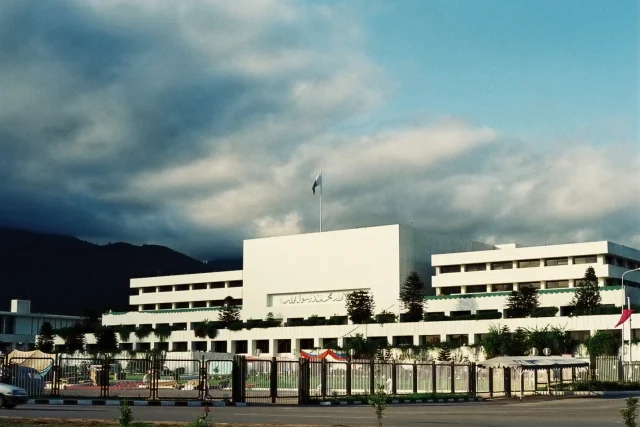
To understand the Parliament whose committees and records feed this kind of journalism, read our explainers on the National Assembly and the Senate of Pakistan.
Follow the people who shape Pakistan's politics
PoliticsPK explains who is who, how the system works and what changes, without the noise.
More in Pakistan Politics Politics Explained Latest from PoliticsPK
Frequently asked questions
❓ Who is Rauf Klasra?
He is a Pakistani investigative journalist, Urdu columnist, author and television host from Layyah in southern Punjab, best known for the talk show Muqabil.
❓ Where is Rauf Klasra from?
He comes from Layyah district in the south of Punjab.
❓ What is Rauf Klasra’s education?
According to his public biography, he studied English literature at Bahauddin Zakariya University in Multan and later studied at Goldsmiths, University of London.
❓ What is Rauf Klasra’s age?
His date of birth is not confirmed by a reliable source, so we do not state his age.
❓ Which newspapers has Rauf Klasra worked for?
He reported for Dawn and The News, was Editor Investigations at The Express Tribune and has written Urdu columns for Jang and Akhbar-e-Jahan, among others.
❓ Which channels has Rauf Klasra worked for?
Dunya, 92 News, ARY News, Aap News and Public News.
❓ Why did Rauf Klasra leave 92 News?
His public biography records that he resigned on 28 April 2019. No confirmed public reason was found for this draft.
❓ Which books has Rauf Klasra written?
His Urdu books include Aik Siyasat Kai Kahaniyan, Aik Qatal Jo Na Ho Saka, Gumnaam Gaon Ka Akhri Mazar and Shah Jamal Ka Mujawir. He has also translated The Godfather and work by Balzac into Urdu.
❓ Which channel is Rauf Klasra on now?
That could not be confirmed for this article. Sources disagree, so please check his own official pages.
Sources
- Wikipedia, “Rauf Klasra” — biography as last edited on 24 August 2026; its statement about his present employer conflicts with other reports.
- JournalismPakistan, “Rauf Klasra, four others quit Dunya Group” — November 2014.
- JournalismPakistan, “Klasra, Mateen return to 92 News” — February 2016.
- JournalismPakistan, “Klasra heading back to The News” — background on his newspaper moves.
- All Pakistan Newspapers Society — the body that gives the annual journalism awards.